Map the load path
- Where are materials dropped, and where must they be placed—at grade, on a mezzanine, or over a parapet?
- Are there tight turns between bollards, columns, or stored product?
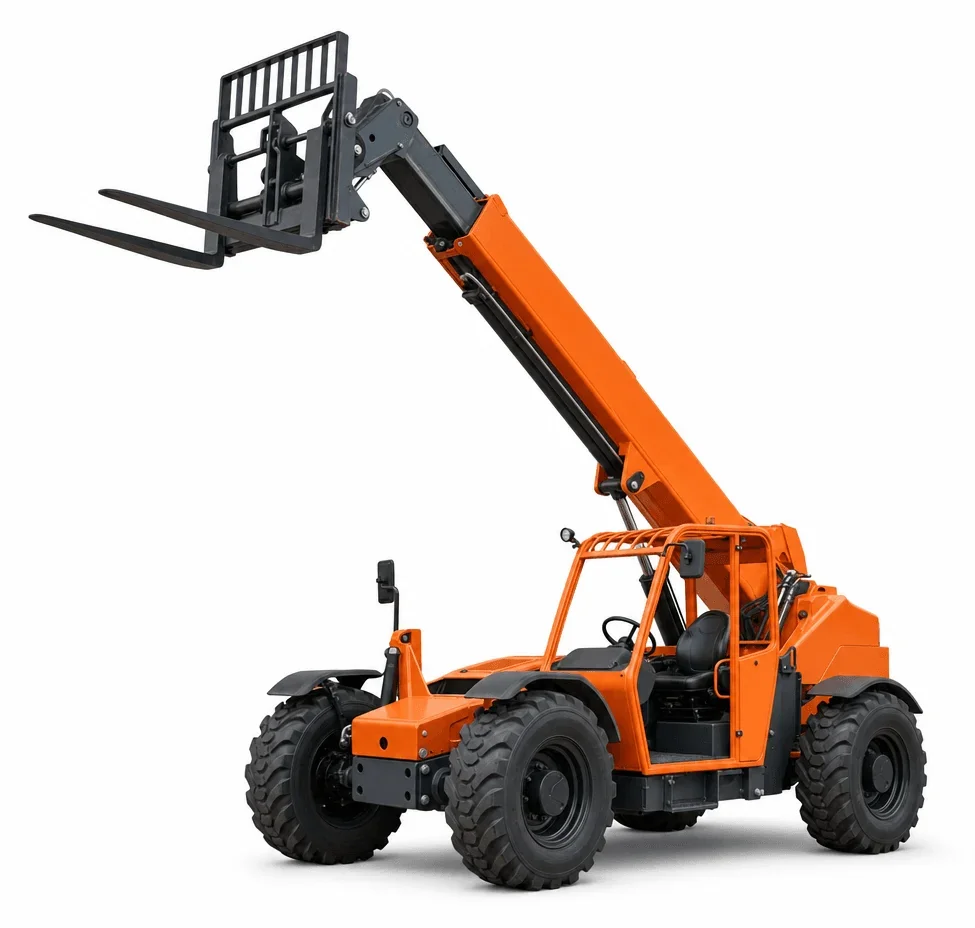
- What is the heaviest expected load and at what boom extension?
Capacity charts change as the boom extends. Long reaches to set loads on upper levels require higher base capacities than short picks at ground level.
Local surface and weather considerations
- Mixed yards that transition from asphalt to aggregate or saturated soil call for rough-terrain axles, higher ground clearance, and appropriate tires.
- Winter conditions reduce traction and visibility. Plan for stable staging near plowed access and ensure forks and carriage match pallet types commonly used on local industrial deliveries.
Fit and function checks
- Overall width and turning radius for moving between storage rows
- Lift height and forward reach relative to placement point
- Quick-attach carriage style if site tools or buckets are expected
- Load weight plus rigging hardware versus rated chart at the intended reach
When another machine is a better match
- Strictly indoor pallet movement on smooth slab aligns with /forklift-rental/.
- Elevated work for people rather than loads belongs on /boom-lift-rental/ options like /telescopic-boom-lift-rental/ or /articulating-boom-lift-rental/.
Actual conditions, the selected unit’s instructions, and site procedures govern elevated and material handling work.
Related planning
For temporary perimeter control or storage while staging materials, see /temporary-fencing-barricades-rental/ and /storage-containers-rental/. Power for cold-weather heaters or lights is at /generators-light-towers-rental/.