Fit the building before the height
- Confirm doorway and mezzanine clearances. The machine must pass without de‑rigging fixtures.
- Match turning radius to aisle width; dense storage layouts in Toledo’s distribution buildings often demand a narrow chassis.
- Check floor ratings around pits, embedded rails, or trenches common to industrial sites.
Platform height and capacity
- Size platform height to the task plane with a margin for working posture and tools.
- Capacity matters when lifting parts bins, lighting cartons, or panels. Some compact models trade capacity for narrow width; balance both.
Local conditions that influence electric choices
- Regional climate: Cold periods reduce runtime, so charging access inside facilities matters. High‑humidity days can extend dew times near open dock doors; plan staging away from moisture.
- Industry geometry: Overhead conveyors, crane rails, and ducts create narrow vertical corridors. A scissor’s straight‑up path works when it can sit directly below the task; otherwise see /aerial-lift-rental/.
Tires, controls, and steering pattern
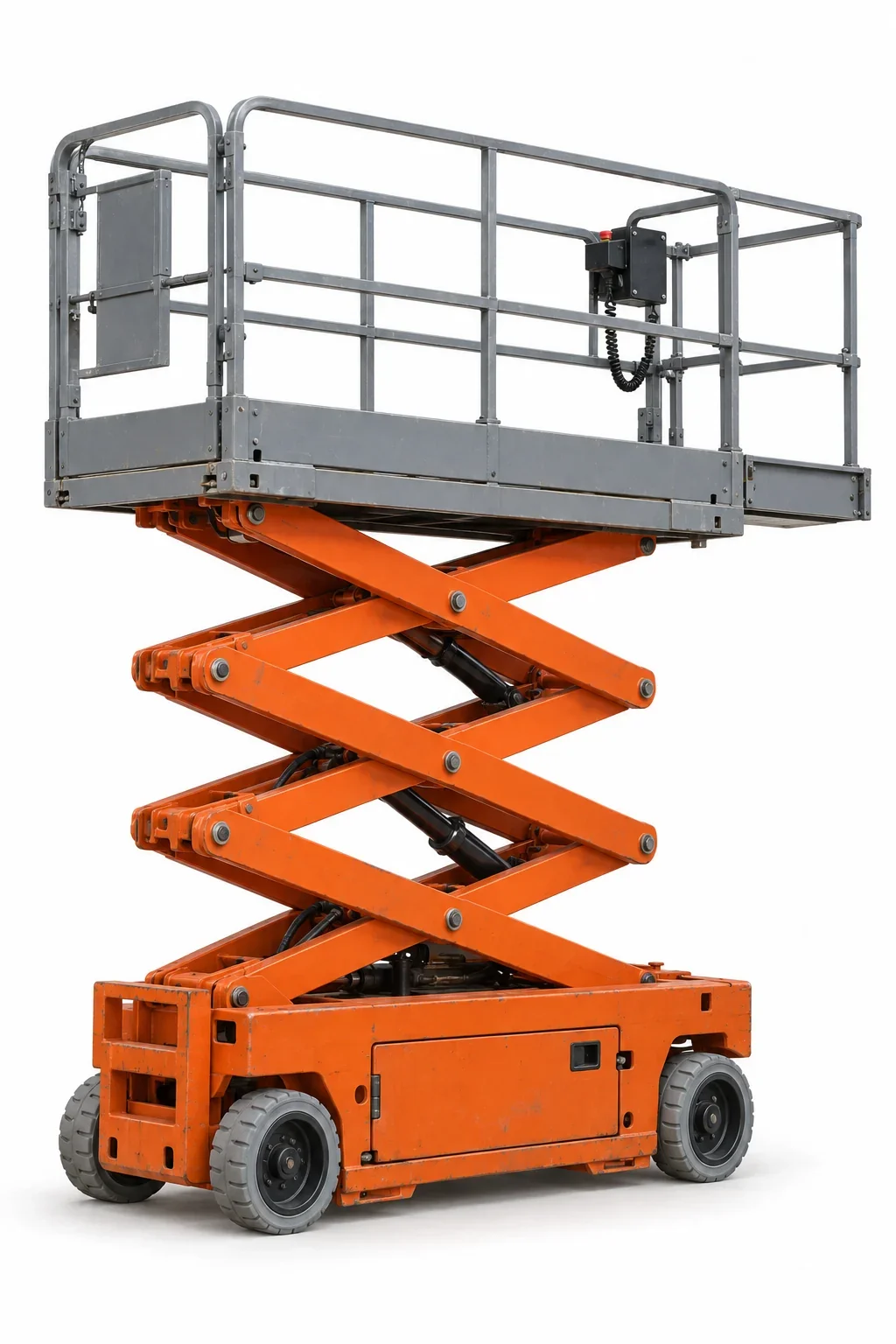
For finished floors, non‑marking tires are standard. Two‑wheel steering helps in long aisles; some compact units add zero‑inside‑turn capability for tight pick modules.
When an electric scissor isn’t enough
- Obstructions or offset work: Consider /boom-lift-rental/ for articulating booms.
- Occasional outdoor tasks on uneven surfaces: Review /rough-terrain-scissor-lift-rental/; slab scissors are not intended for soft or broken ground.
Actual conditions, the selected unit’s instructions, and site procedures govern elevated interior work.