Start with job geometry
- Can the machine sit below the task, or must it reach over something?
- Is there a fixed obstacle—like a canopy, gantry, or duct bank—between the base and the work point?
- How much horizontal outreach is needed once you clear the obstacle?
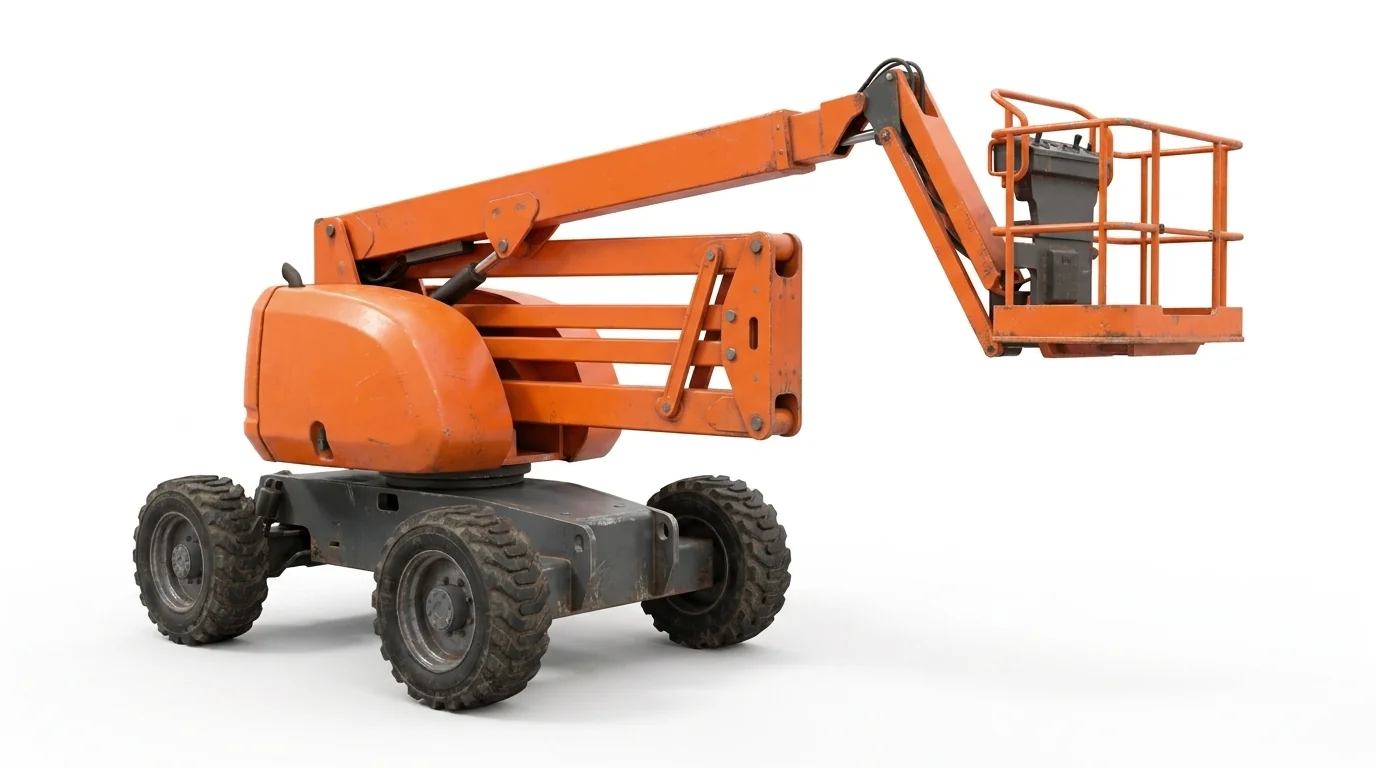
Articulating booms place the basket by bending at several points. That makes them useful inside manufacturing bays with overhead equipment and along building perimeters where ledges or parapets block straight approaches.
Site constraints that change the pick
- Floor loading and aisle width: Tight factory aisles or polished slab floors favor compact electric or hybrid units designed for indoor use. Check doorway height and turning radius.
- Surface conditions: Outdoor staging near older drainage corridors or saturated turf can require rough-terrain models with oscillating axles and lugged tires. Marshy pockets common to the region’s soil history may not support smaller tires.
- Weather exposure: Lake-effect snow and freeze-thaw cycles create slick approaches and cold batteries. Cold conditions reduce electric runtime and lift speed; plan charging windows under roof where possible.
Working near glass and sensitive finishes
In facilities known for high-clearance glazing or precision equipment, basket positioning accuracy and fine control matter. Articulating joints let the operator feather into place at elevation while keeping the base farther from fragile surfaces. Non-marking tires and electric drive reduce floor transfer and fumes for enclosed areas.
Typical measurement checks
- Lowered height and width to pass interior doors or under pipe bridges
- Up-and-over clearance at the knuckle height, not just platform height
- Horizontal reach at working elevation, not just maximum
- Platform capacity versus the total weight of people, parts, and tools
When a different category fits better
- Clear, long, exterior reaches to stacks or signage often match a straight boom; see /telescopic-boom-lift-rental/.
- Simple vertical work on solid slab with minimal obstructions may be faster on /electric-scissor-lift-rental/.
Actual conditions, the selected unit’s instructions, and site procedures govern elevated work.
Related planning
For mixed indoor/outdoor scopes that add material staging, see /telehandler-rental/. For general overview across aerial work, visit /aerial-lift-rental/ or /boom-lift-rental/.